
<!–OLD CONTENT. NEW CONTENT PLEASE SEE SECOND BLOCKWhen purchasing used pallet racking there are lots of details to consider to ensure you choose the right storage system for your operation. The size of the products you’re storing, as well as the size and layout of your facility factor into every decision throughout the purchasing process. From what type of racking to choose, to what accessories you need.
At ASI, our knowledgeable sales team will walk you through everything from the quote to installation. That said, we know that shopping for used pallet racking can be overwhelming. To help simplify it, here is a glossary of common pallet racking terms. If you still have questions once you review this list, give us a call at (800)876-3736.
Pallet Rack Columns or Pallet Rack Frames
Pallet Rack Beams or Pallet Rack Crossmembers
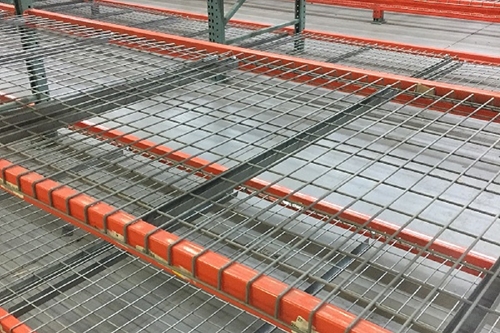
Pallet Rack Wire Decking
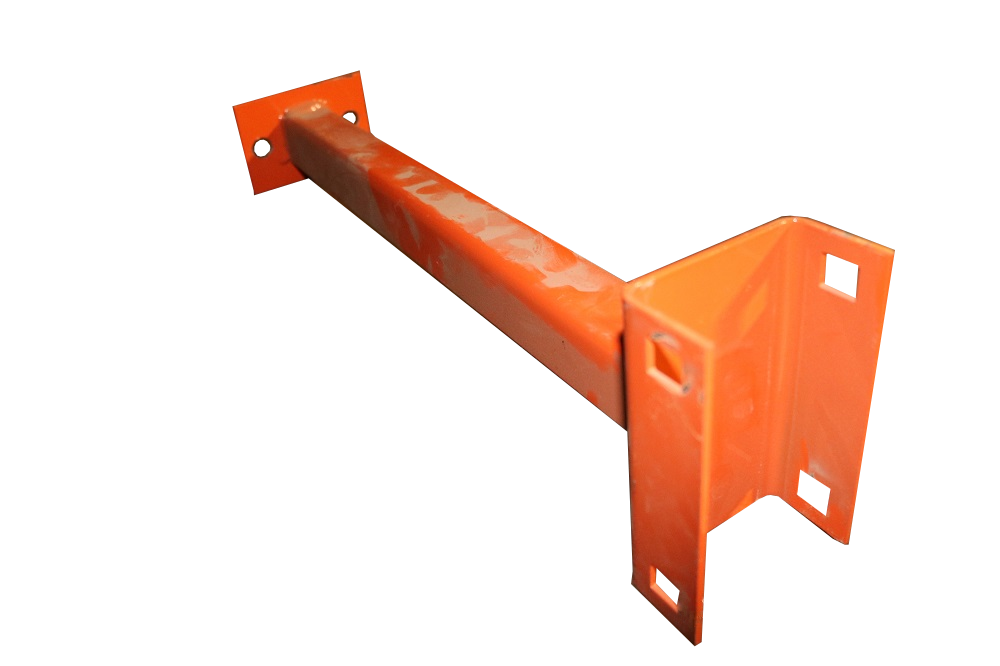
Pallet Rack Row Spacers
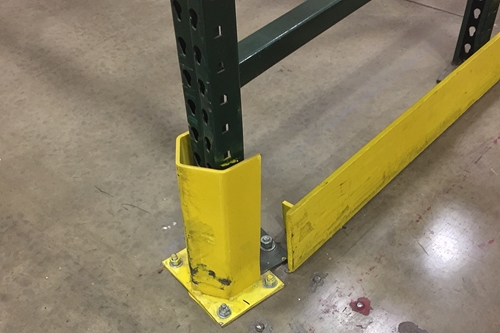
Pallet Rack Column Protectors
Pallet Rack End Of Aisle Guards
Pallet Rack Wall Ties
Pallet Rack Stop Bars
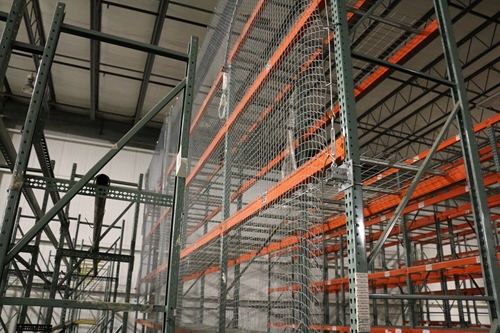
Pallet Rack Netting
Splice Kits
Bullnose Column Protectors
Rub Rails
<!–continue
At American Surplus, we do more than just sell you a used pallet rack system. We also take care of the design and installation process so you do not have to risk doing it yourself. Save time and money by calling ASI today! We will ensure your racking is assembled in a safe and timely manner.
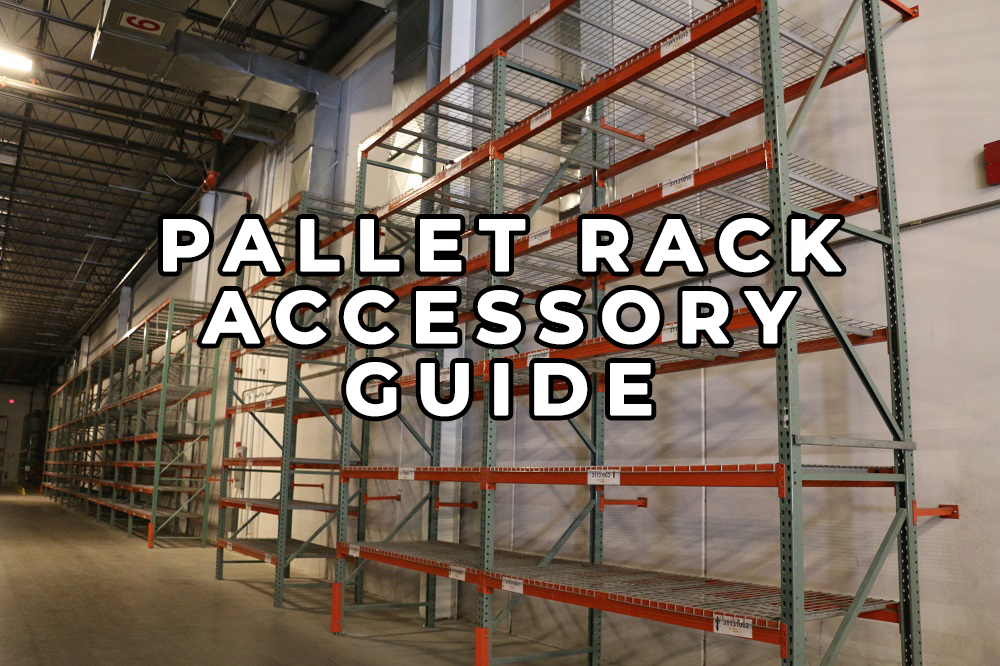
From wire decking and wall ties, check out ASI’s pallet racking accessory guide to brush up on your vocabulary!
Pallet racks store materials on pallets in horizontal rows on multiple levels. Pallet racks require the use of a forklift truck to load and unload pallets onto the racks. All pallet racks, no matter the style, will increase the storage density of your warehouse, retail centers, and any other storage facility.
Some of the brands we sell are: Bull Dog, Husky, Burtman, Interlake, Dexco, Teardrop, Deltruie, Mecalux, Elite, Konstant, Excell, Penco, Frazier, Republic, Frick Gallager, Ridg-u-Rack, Structural Pallet Racking, and Speed Rack. If you are unsure of the brand of your current pallet racking please check out our Identification Guide.
There are many factors to consider when choosing which style of pallet racks are right for you: Storage density required/desired; Building space, both floor space and height; placement of obstructions (doors, support beams, building columns, etc.); inventory size and weight; inventory accessibility and cost.
Used selective pallet racks are the least dense and also the least expensive option, and allows for direct access to each product at each shelf height. They come in two main styles: roll formed and structural. Roll formed racking is typically lighter and has horizontal load beams that are held into place by clips, and are typically adjustable in 2 inch increments. This makes adjusting the rack heights very easy, but roll formed pallet racks cannot hold as much weight as other styles, and tend to be less resistant to impact by forklifts.
Q: What is Selective Pallet Rack?
A: The most common style of pallet rack, selective pallet rack, is designed for high-density warehouses that store a large variety of products. Selective rack provides 100% access to all pallet positions at all times without having to move other pallets. Based on cost per position, selective rack is the least expensive type of pallet rack. Selective rack is easy to install and easy to reconfigure should storage dimensions change. While not as durable as structural steel pallet racking, selective pallet rack can do the job in most cases.
Q: What is Drive-In Rack?
A: Drive-in rack is a narrow storage system best for applications that utilize the “Last In, First Out” (or LIFO) method of inventory control. Pallets are stored on rails and access to the pallets is from the front. Pallets are stored back to back which creates a dense storage area. Drive-in rack is ideal for products that ship in and out of the warehouse quickly.
Q: What is Push-Back Rack?
A: Push-back rack, much like drive-in rack, utilizes the LIFO method of inventory control. Pallets are stored on carts which move along rails. Unlike selective rack, which stores in a single pallet deep system, push-back rack can store pallets 2-5 deep. When the first skid or pallet is picked, material behind gently rolls forward on rails. All levels are accessible individually.
Q: What is Pallet Flow Rack?
A: Pallet flow rack is a combination of elevated rails, wheels, and rollers. Pallet flow rack offers a high-density storage system which is ideal for operations using the “First In, First Out” (or FIFO) method of inventory control. Warehouses with minimal space are ideal for pallet flow rack, as aisle space can be reduced by as much as 75%
Q: What is the Difference Between Pallet Rack and Industrial Shelving?
A: Industrial Shelving is used for storing small parts and boxes that will be loaded by hand. These shelving units can be free-standing or bolted together. Pallet racks are heavy duty storage racks found in warehouses and big-box retailers such as Home Depot, Lowes, or Costco. Product is stored on pallets and loaded with a forklift or other powered industrial truck. Pallet rack is taller and wider than shelving.
Q: Is there a standard size for pallet rack?
A: The most common height for pallet rack frames is 16′. However, we have frames available from 8′ all the way to 60′ high. Depths range from 18″-72″. Pallet rack beams range in length from 4′ to 16′, with the most common beams being between 8′ and 12′ long, depending on the application.
Q: What are Pallet Supports?
A: Pallet supports are used to reinforce a pallet rack system. Supports are installed onto the step of the beam allowing storage of heavy pallets without worry. It is our recommendation to use two pallet supports per pallet position; they are the best insurance you will ever purchase!
Q: What are Column Protectors?
A: Column protectors are installed on the bottom of a pallet rack frame and are designed to absorb impacts from forklifts and other moving equipment throughout the warehouse; protecting your employees, rack, and product from dangerous accidents. Column protectors are available at 12″, 24″, 36″, and 48″.
Q: What are the different types of Wire Decks?
A: Waterfall decking is the most common style of wire deck. This type of decking sits in the step of the pallet rack beam. The support channel rests on the step and the “waterfall” wraps around the top of the beam.
Flush waterfall decks fit similarly to standard waterfall decking, with the only difference being that they do not hang over the top of the beam, the sit on the step of the beam.
Inverted wire decks are another common type of wire decking. This deck has a flange at the end of the support channel, making it easy to fit on step or box beams.
Lastly, flush flat wire decking simply sits flush on top of the beam.
Q: Should I use particle board or plywood for the decking?
A: Particle board or plywood should only be used for light duty storage. Wire decking is the recommended material for decking, especially considering many municipalities have local fire codes requiring the use of wire decking.
Q: What are Row Spacers?
A: Row spacers provide a consistent amount of distance between two rows of pallet rack. Row spacers have a flange on each end to secure the spacer to the frame. Row spacers should be installed when there are multiple bays in a continuous row. The recommended number of row spacers per frame is as follows:
Q: What are Wall Ties?
A: Wall ties secure an individual section of pallet rack to the wall. The wall tie acts as a stabilizer for the unit. Two wall ties per upright are recommended.
Q: What is Pallet Rack Netting?
A: Pallet rack netting is hung underneath a pallet rack system, preventing product that has fallen off the racks from making it all the way to the ground. This protects your employees from injury as well as potentially reducing damage to fallen product.
Q: Do I have to anchor my pallet rack system to the floor?
A: You should always anchor your pallet rack to the floor. The footplates on your uprights offer specific locations to place your anchors, which are essential to prevent the entire rack system from falling over as well as for enforcing uniform aisle spacing.
Q: How do I determine what size racks I will need?
A. It is easy to figure out what size rack you will need! First, determine the load depth, width, and height of your pallets. Then, call an ASI pallet rack specialist at (800) 876-3736 who can assist you in getting the right pallet rack system for your application.
Q: Can I order pallet racking in non-standard sizes?
A: Yes, our racking department and fabrication shop can customize racking to meet your needs. We suggest discussing this with one of our pallet rack technicians who will determine your best options.
END OLD CONTENT. PLEASE SEE BLOCK 2 FOR NEW CONTENT WITH UPDATED LAYOUT–>
When purchasing pallet racking there are lots of details to consider to ensure you choose the right storage system for your operation. The size of the products you’re storing, the size & layout of your facility, inventory control methods, and more all factor into every decision throughout the purchasing process. From what type of racking to choose, to what type of accessories you need, there’s quite a bit to wrap your head around.
At ASI, our knowledgable sales team has been guiding businesses to buy the right pallet rack for them since 1991. Our sales team will walk you through the entire process from quoting, to layout design, through to installation. That said, we know that shopping for pallet racking can be overwhelming if you don’t know what goes into a pallet rack system. To help make the process easier for you, we’ve created a glossary of common pallet racking terms.
Once you’ve brushed up on your pallet rack parts, you’re ready to start your pallet rack consultation with our sales team; Give us a call at (800) 876-3736 today to get started!
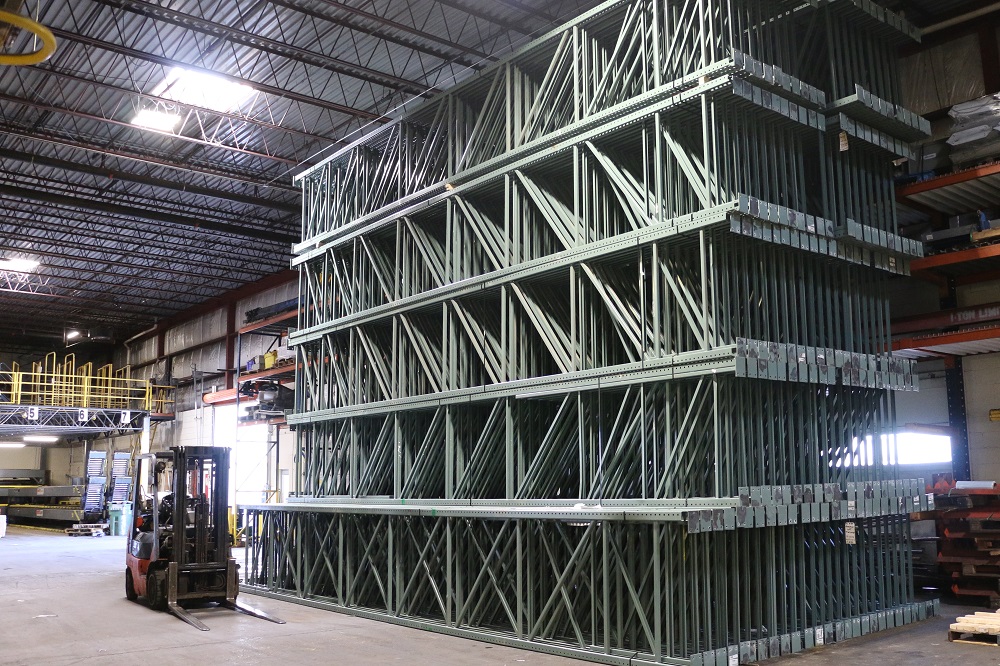
Pallet Rack Frames are the vertical supports from which you mount your beams. Two frames can be attached via beams to create a bay of pallet racking. Their modular design allows the user to attach multiple bays parallel to each other to create long runs of racking, or they can be attached perpendicular to each other to create more complex storage structures.
Pallet Rack Frames are often also referred to as:
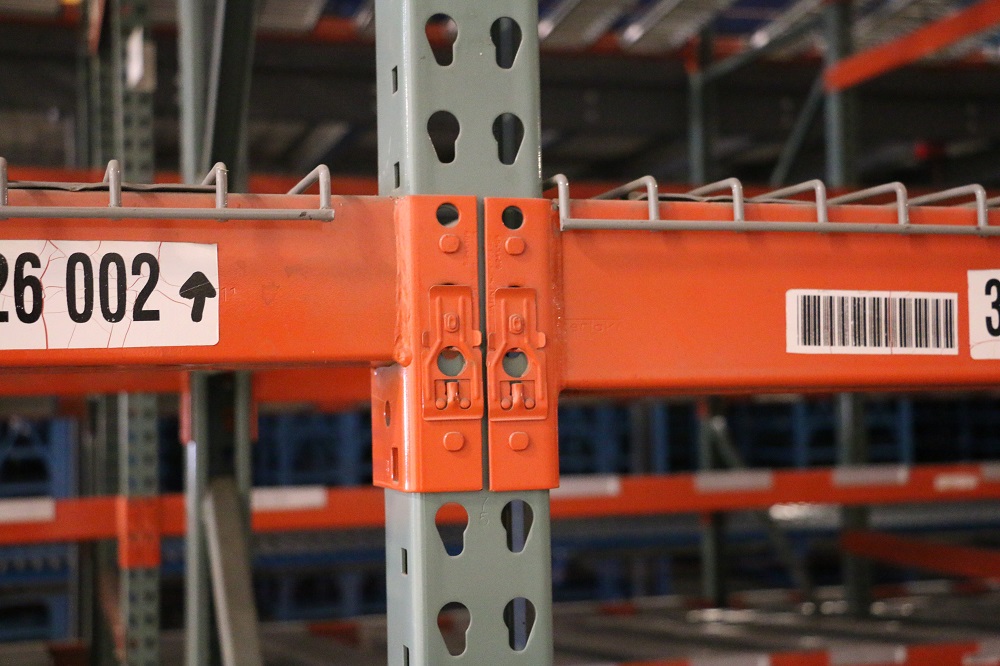
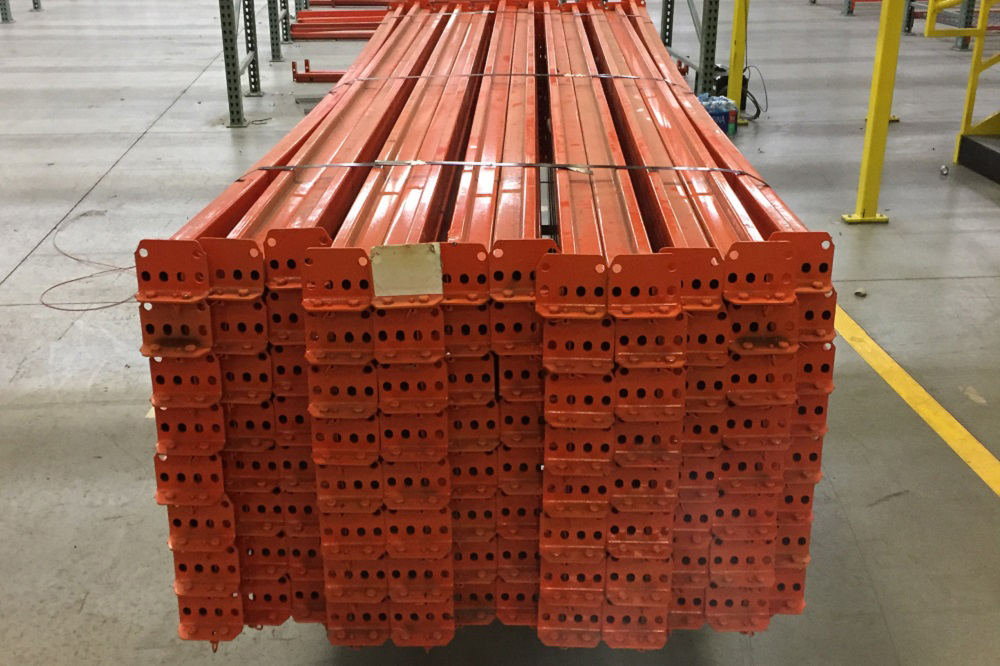
Pallet Rack Beams are horizontal supports that run from frame to frame, providing the structural support for your racking. Pallets that are large enough to span the depth of the rack will sit on two beams – one at the front and one at the back. In general, four beams and two uprights are the minimum materials needed to construct a bay of pallet racking.
Pallet rack beams come in two common styles: teardrop pallet rack beams and structural pallet rack beams. Structural beams are designed for heavier duty applications and use a nut & bolt to attach to a structural upright. Teardrop beams, while having a lower capacity rating, enjoy simple, bolt-free installation with a built-in teardrop connection on the beam itself.
Pallet Rack Beams are often also referred to as:
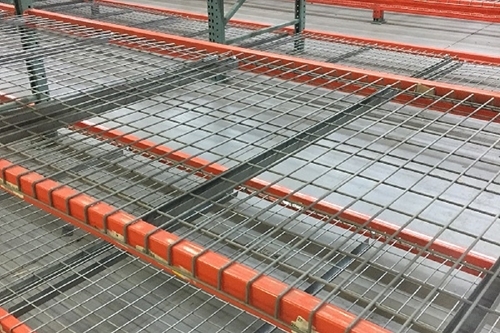
Pallet Rack Decks are used to bridge the gap between two beams on a single level of racking, providing additional support for the load as a level surface on which to store pallets.
A variety of styles of pallet rack decking exist, including plywood decking, corrugated steel decking, PunchDeck, and a variety of styles of wire decking, the most popular style of pallet rack decking.
Pallet Rack Beams are often also referred to as:
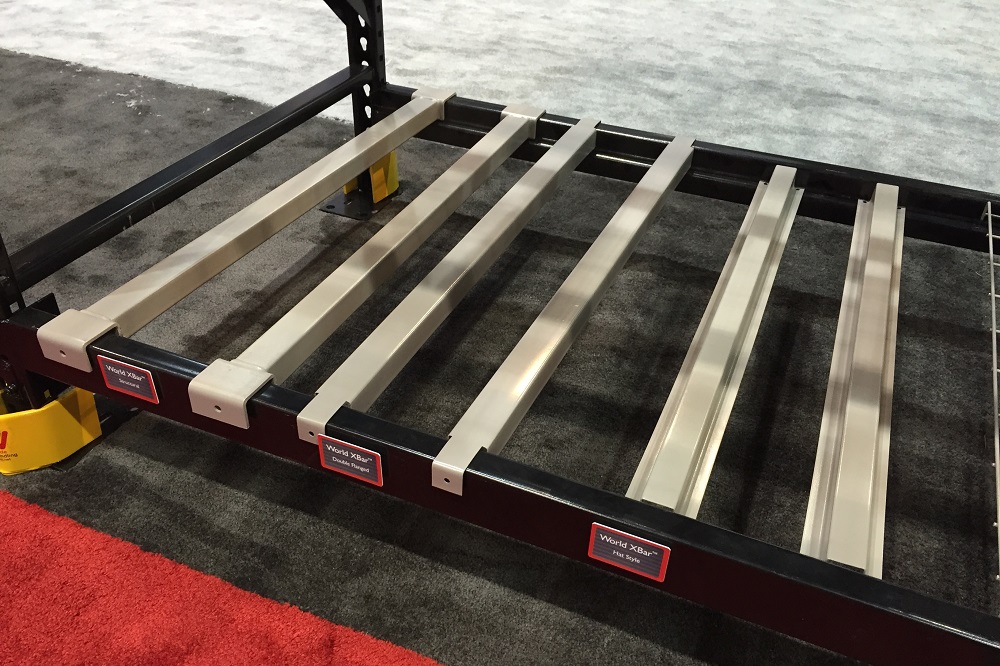
As an alternative to decking, many business choose pallet supports for extra support for pallets that aren’t as deep as their rack system. Resting comfortably inside the step of your pallet rack beam, a pallet support provides a level surface for pallets and additional peace of mind for your forklift operators when loading pallets onto your rack.
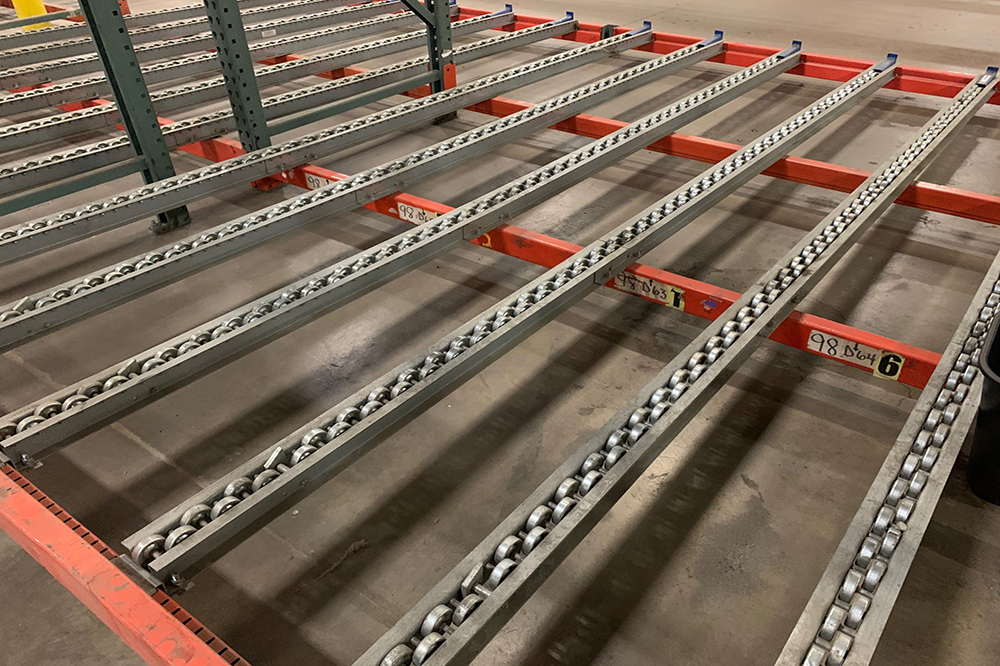
Another alternative to standard decking, flow rails provide a slightly inclined surface made of skatewheels on which pallets loaded from one side can freely flow with the assistance of gravity to the other side to be unloaded. Flow Racking provides simple, electronics free automation of a First In, First Out inventory control system.
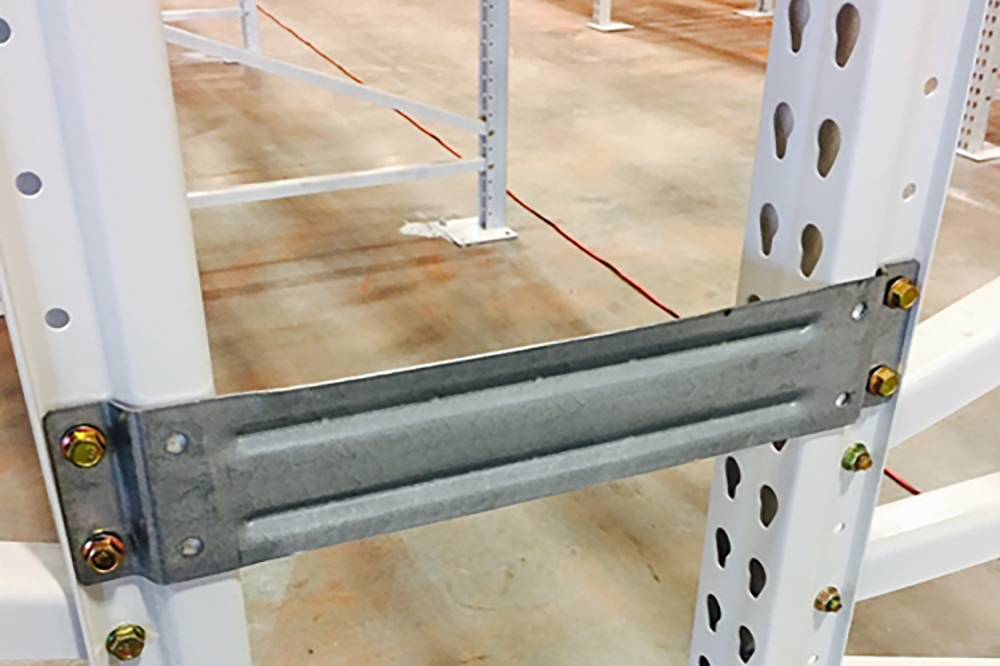
Row Spacers are metal flanges bolted onto the frames of two adjacent rows of pallet rack. Available in a variety of widths depending on your preferred rack spacing, they enforce uniform, parallel rows during installation as well as bolster your racking system’s overall stability.
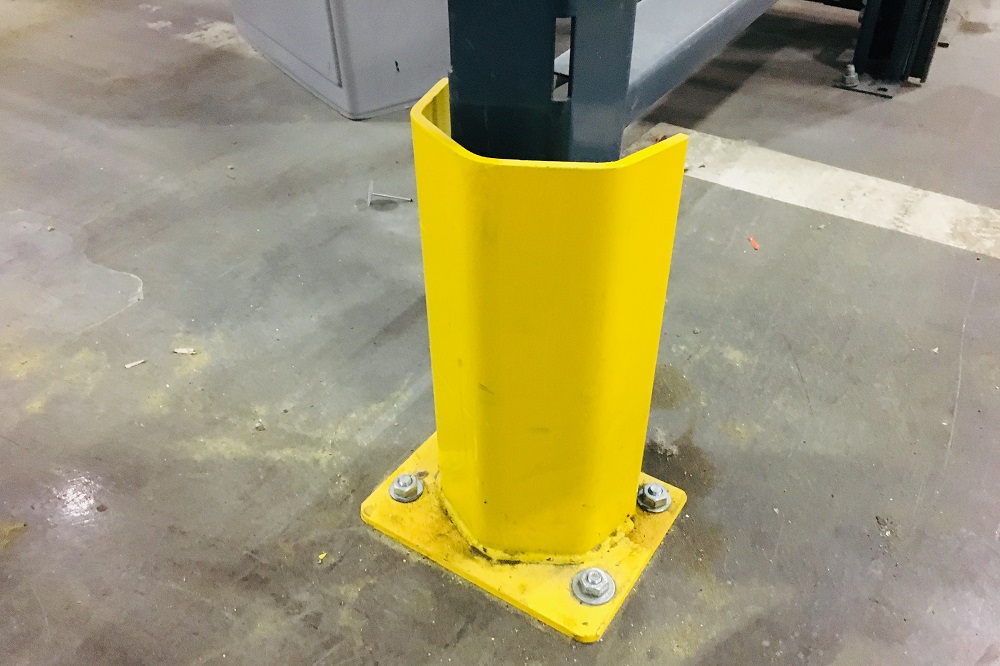
Column Protectors are upright pieces of metal which are bolted to the floor, surrounding the base of your pallet rack frame. Designed to absorb impacts from forklifts and other heavy machinery, they are a worthwhile investment; Greatly increasing your pallet rack’s safety and longevity.
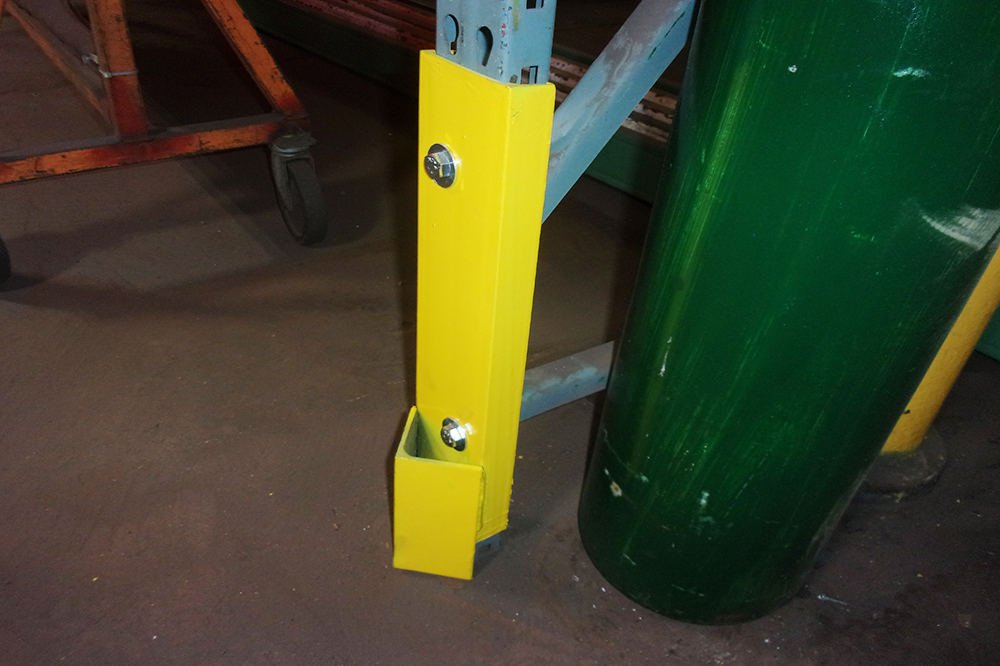
In areas with high forklift traffic, a bullnose column protector can reduce the effect of an impact with the help of a significantly strengthened connection to the floor slab. A bullnose protector typically features an additional 3/4″ anchor installed inside the front bullnose to reduce damage and column rotation during impacts.
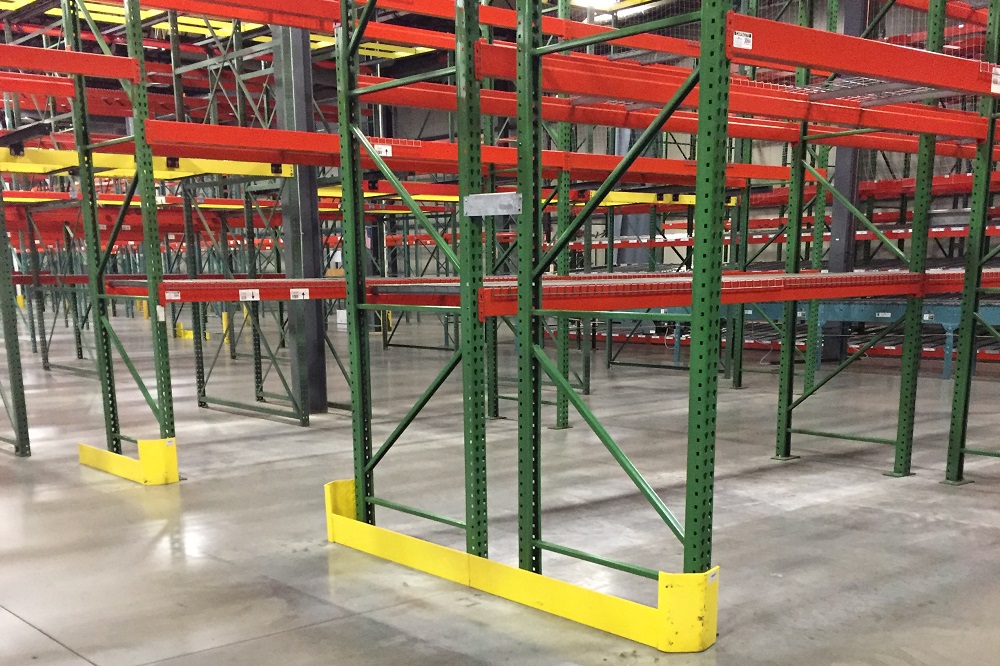
End of Aisle Guards are a complementary safety product to your pallet rack’s column protectors, defending the entire depth of your pallet rack from impacts on the outside end of the rack. The end of your pallet rack row is most directly exposed to forklift traffic, and therefore most likely to be subjected to impacts, damage, and abuse. End of aisle guards are a simple, effective measure to defend your rack’s durability.
You may see End of Aisle Guards referred to as…
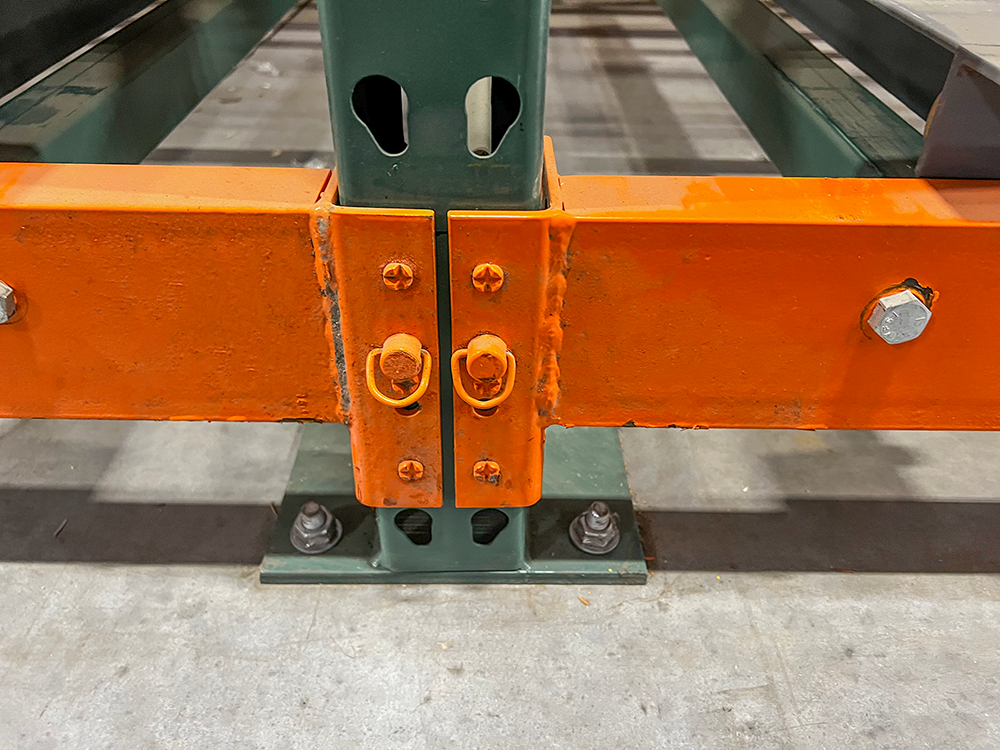
Seismic Footplates provide maximum stability for your pallet racking, securely anchoring your rack into the warehouse floor. These heavy duty rack footplates may be required in areas with high levels of seismic activity, but provide added safety and stability to any racking system anywhere.
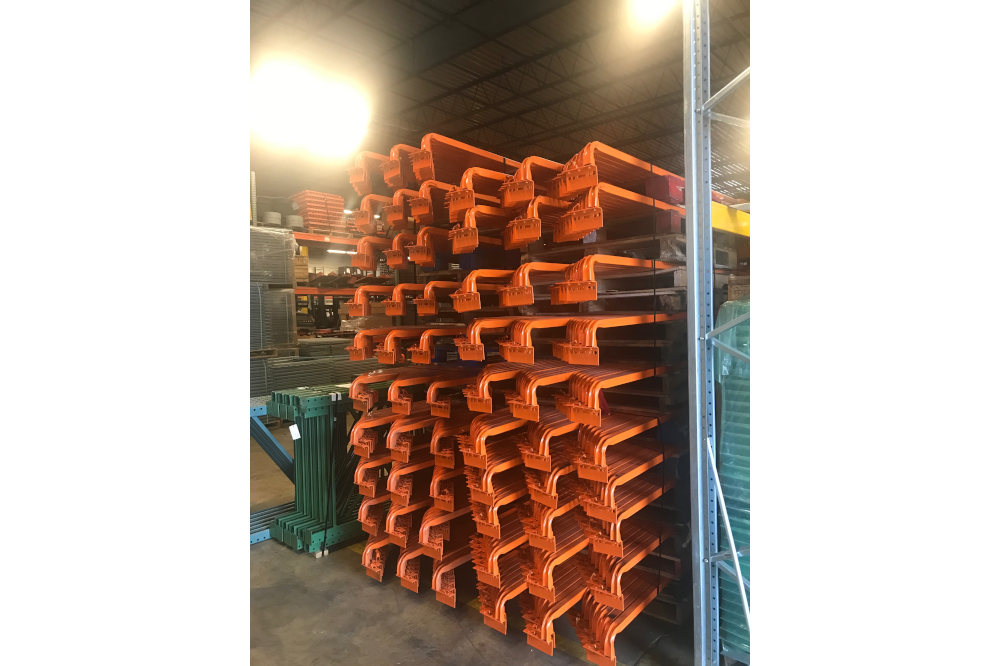
Wall ties bolster the stability of a rack that is located adjacent to wall by bolting the rack directly into the wall. This added level of protection can be a must have in areas with high seismic activity.
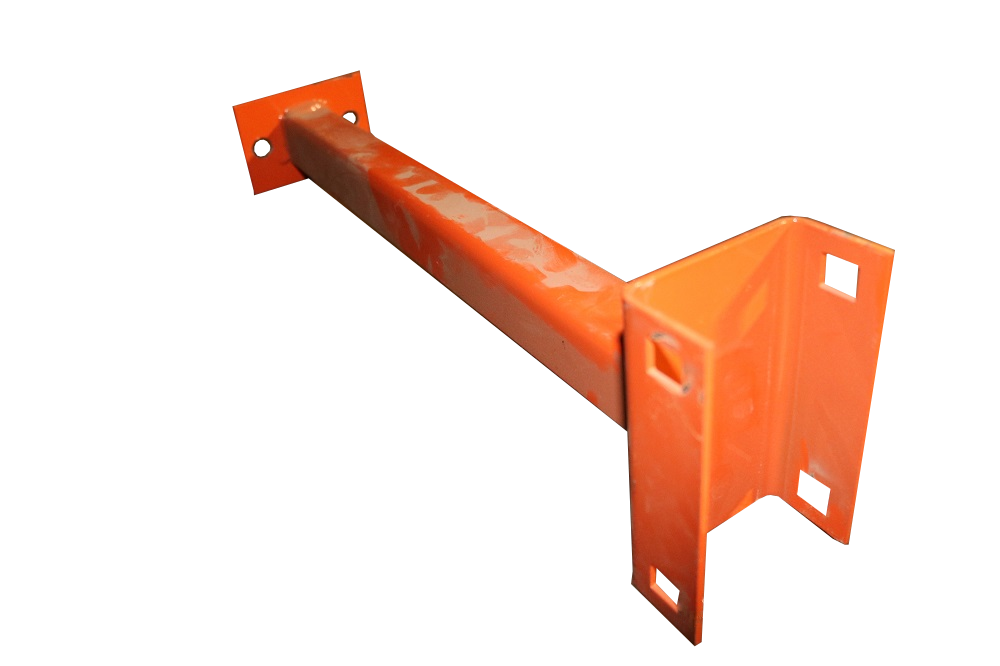
Stop bars further increase the safety of your racking system by attaching to the back side of a bay to provide a stop point for pallets being loaded. This is intended to prevent a forklift operator from accidentally pushing a pallet past the end of the bay, protecting your employees and products from serious injury and damage.
As a result of Stop Bars obstructing one side of the rack, they’re only useful in situations where a rack is loaded and picked from the side, such as with pushback rack or when racking is adjacent to a wall or a high traffic aisle.
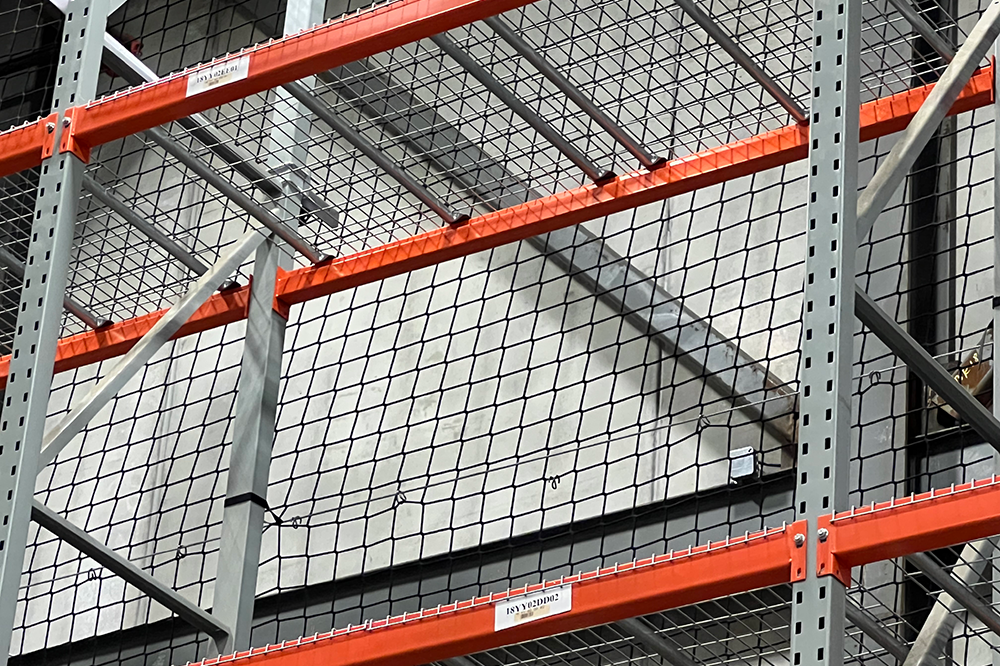
Like Stop Bars, pallet rack netting prevents falling product from reaching the ground, protecting it from impact damage and more importantly, protecting employees working below. Racking safety products such as netting & stop bars are an inexpensive investment upfront that pay dividends in the long term.
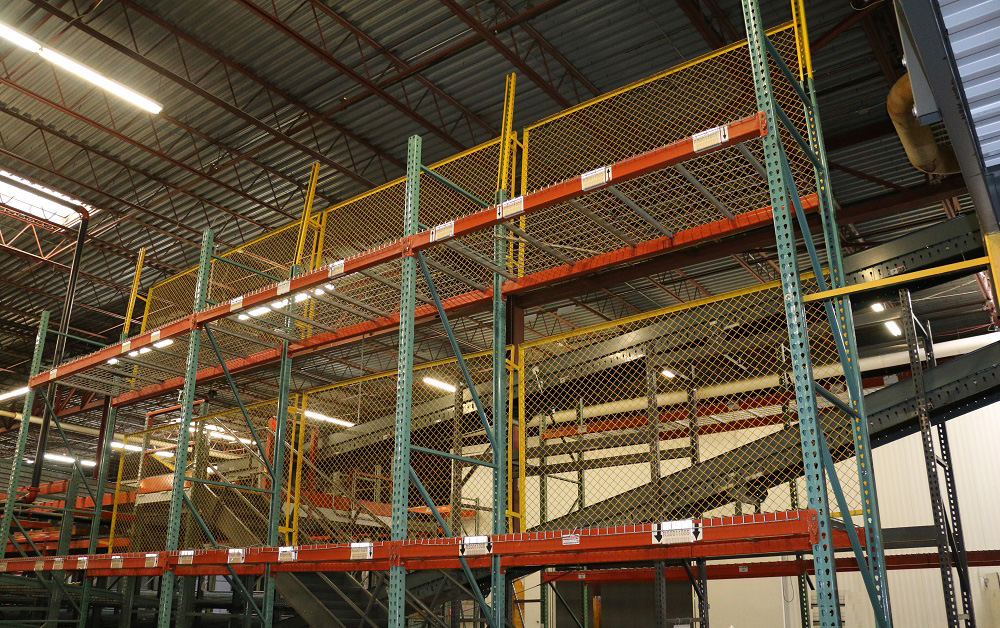
For heavier duty protection compared to rack netting, one can choose pallet rack back guards, which are made from corrosion resistant stainless steel. Back guards attach directly to your racking system to perform the function of both stop bars and netting in one, making them a great choice for safer aisles adjacent to high-traffic areas.
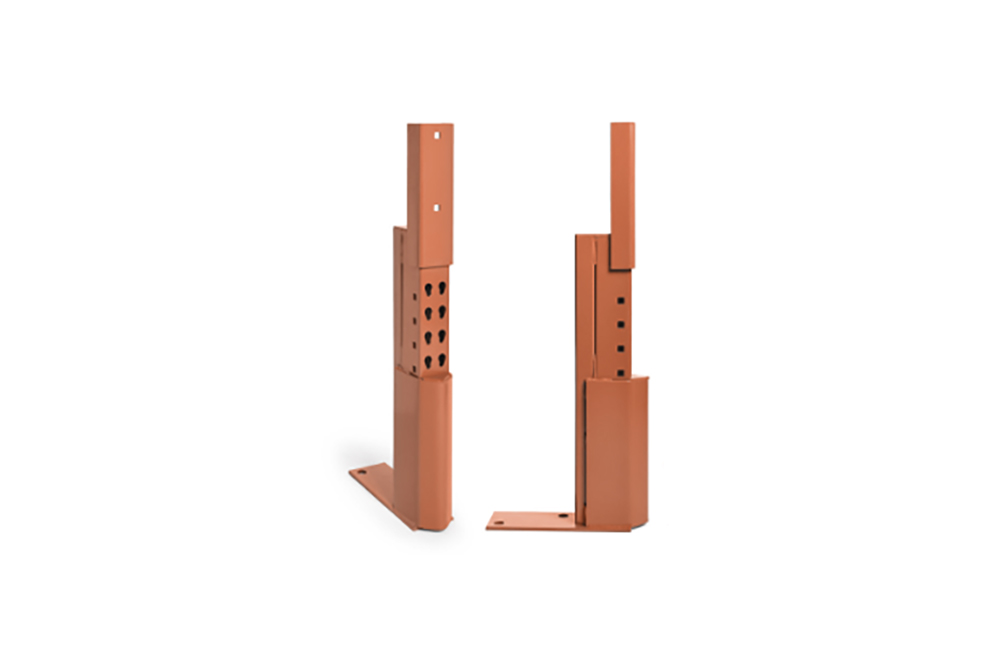
Sometimes referred to as pallet rack splice kits, rack repair kits are an in-place solution that restores the functionality of a pallet rack frame after a serious forklift impact without sacrificing the original load capacity of the pallet rack. Having rack repair kits handy in the event of an accident can prevent a catastrophic failure while saving time and money on rack replacement costs.
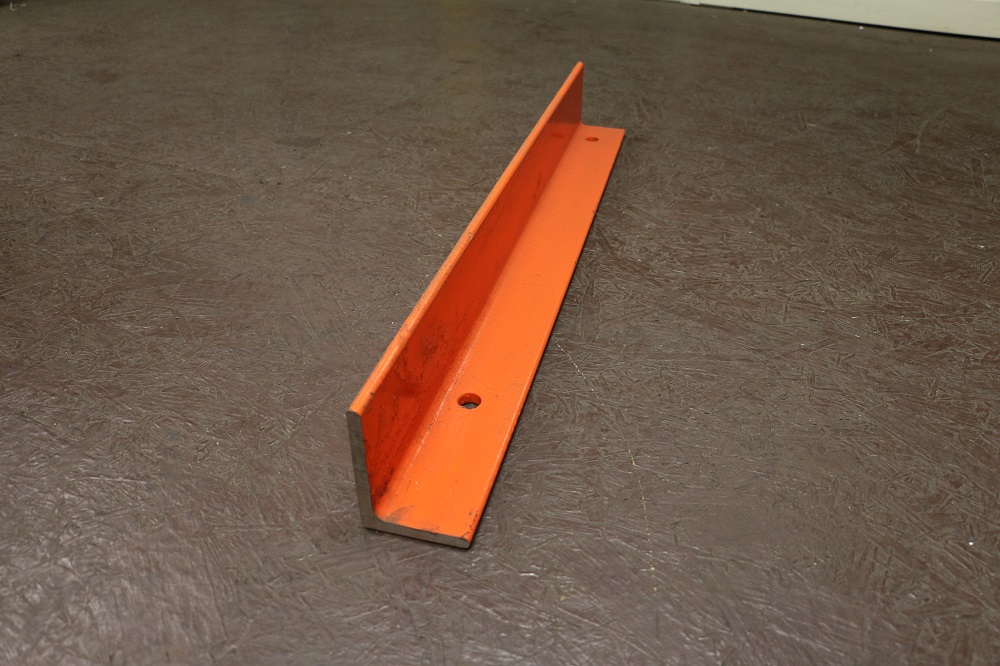
Rub rails are installed to protect vulnerable surfaces in tight aisles and high traffic areas. They are often installed as a safeguard for the end of rack aisles, in-plant offices, and exposed equipment. You may also find rub rails referred to as pallet rack floor guides.
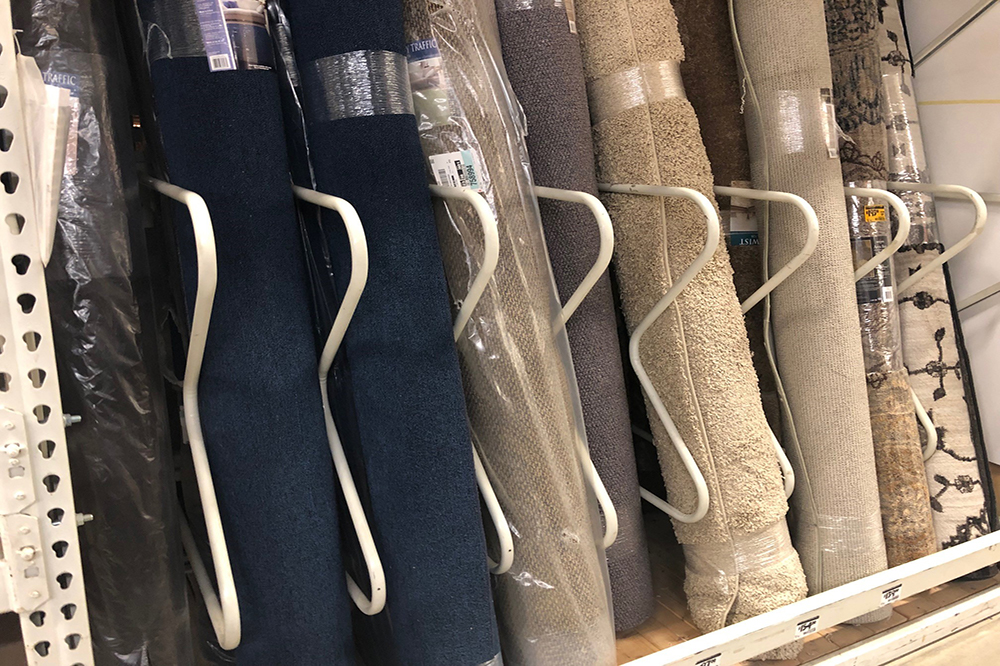
Pallet rack dividers mount directly to your pallet rack beams to help keep unusually sized loads upright and organized. Pallet rack’s high versatily means that with the right accessories, even unusual products like lumber and carpet and can stored safely and comfortably within your rack system alongside other palletized products.